
• Skip to primary navigation
  • Skip to main content
  • Skip to primary sidebar
  • Skip to footer
Calculus From Limits to Mastery

Calnzee

Think Calculus. Learn Calculus. Live Calculus

  • Home
  • Articles
  • Terms
    • Privacy
    • Disclaimer
  • Support
  • Subscribe
  • Contact

mean value theorem

Why a Semicircle Can Satisfy MVT Even When the Derivative Doesn’t Exist at the Endpoints

June 23, 2026 by Splendid Leave a Comment

Mean Value Theorem Explained

Understanding Why the Mean Value Theorem Can Still Work When the Derivative Does Not Exist

The Mean Value Theorem (MVT) is one of the most important results in differential calculus. When students first learn the theorem, they are often told that the function must be continuous and differentiable. This can create confusion when they encounter examples such as a semicircle where the derivative does not exist at certain points, yet the theorem still applies.

In this lesson, we’ll explore why this happens.

The Mean Value Theorem Statement

Suppose a function f(x) satisfies:

It is differentiable on the open interval (a,b).

Then there exists some point c in the interval such that
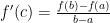
f'(c)=\frac{f(b)-f(a)}{b-a}

This means that somewhere between a and b, the instantaneous rate of change equals the average rate of change.


The Key Detail Many Students Miss

Notice the wording carefully:

  • Continuous on [a,b]
  • Differentiable on (a,b)

The derivative is only required to exist inside the interval.

The theorem does not require the derivative to exist at the endpoints a and b.

This distinction is extremely important.


Example: The Upper Semicircle

Consider the function

f(x)=\sqrt{r^2-x^2}

This represents the upper half of a circle of radius r.

The graph looks like a smooth arch.

The derivative is

f'(x)=\frac{-x}{\sqrt{r^2-x^2}}

At the endpoints x=-r and x=r, the denominator becomes zero:

\sqrt{r^2-r^2}=0

Therefore the derivative does not exist at the endpoints.


Why MVT Still Applies

Even though the derivative fails to exist at the endpoints, the function is:

  • Continuous everywhere on [-r,r].
  • Differentiable everywhere on (-r,r).

Since the Mean Value Theorem only requires differentiability inside the interval, all conditions are satisfied.

Therefore MVT applies.


Visual Interpretation

At the endpoints of the semicircle, the tangent line becomes vertical.

A vertical tangent means the slope is undefined.

However, since these points are not inside the interval, they do not violate the hypotheses of the theorem.

Think of the endpoints as the “doors” to the interval.

MVT only checks what happens inside the room.


When MVT Fails

1. Corner Inside the Interval

Consider

f(x)=|x|

on [-1,1].

The graph has a sharp corner at x=0.

Since the derivative does not exist at an interior point, MVT cannot be applied.


2. Cusp Inside the Interval

Consider

f(x)=x^{2/3}

The graph has a cusp at x=0.

Again, the derivative does not exist inside the interval.

Therefore MVT fails.


3. Discontinuity

If a graph contains:

  • A hole
  • A jump
  • A vertical asymptote

then continuity is violated and MVT cannot be applied.


Common Exam Trick

Many exam questions attempt to confuse students by showing a graph where:

  • The derivative does not exist at an endpoint.
  • The graph is otherwise smooth.

Students often incorrectly conclude that MVT fails.

Remember:

Derivative undefined at endpoints? Usually okay.

Derivative undefined inside the interval? MVT fails.


A Helpful Memory Rule

Before applying the Mean Value Theorem, check:

Step 1

Is the graph continuous on [a,b]?

If not, stop.

Step 2

Is the graph differentiable everywhere on (a,b)?

If not, stop.

Step 3

If both conditions hold, MVT guarantees a point c where

f'(c)=\frac{f(b)-f(a)}{b-a}

Final Thoughts

The semicircle example teaches an important lesson: the Mean Value Theorem only requires differentiability on the interior of the interval.

A derivative that fails to exist at an endpoint does not automatically invalidate the theorem. What matters is whether the function remains continuous on the entire interval and differentiable at every interior point.

Understanding this subtle distinction helps avoid one of the most common mistakes students make when studying the Mean Value Theorem.

Filed Under: Articles, Integral Calculus Tagged With: mean value theorem

Understanding Secant Lines, Tangent Lines, and Their Connection to Rates of Change

June 20, 2026 by Splendid Leave a Comment

A learner recently explored the difference between average rate of change and instantaneous rate of change and discovered the important roles played by secant lines and tangent lines.

Average Rate of Change and the Secant Line

For a function , the average rate of change over the interval is given by:

\frac{x(b)-x(a)}{b-a}

This formula measures how much the function changes on average between two points.

Geometrically, this quantity represents the slope of the secant line, which is the straight line passing through the two points.

A secant line intersects the graph at two points and provides a way to measure the overall change across an interval.

Instantaneous Rate of Change and the Tangent Line

The instantaneous rate of change describes how fast the function is changing at a specific point.

Geometrically, this is represented by the slope of the tangent line, a line that touches the curve at a single point and has the same direction as the curve at that location.

The slope of the tangent line is what is commonly called the derivative.

Secant Line vs Tangent Line

Secant Line

  • Passes through two points on a curve.
  • Represents average rate of change.
  • Uses information from an entire interval.

Tangent Line

  • Touches the curve at one point.
  • Represents instantaneous rate of change.
  • Describes behavior at a specific moment.

A Common Point of Confusion

The learner also noticed the words secant and tangent from trigonometry and wondered whether they were related.

  • \sec\theta=\frac{1}{\cos\theta}
  • \tan\theta=\frac{\sin\theta}{\cos\theta}

These are trigonometric functions, not lines.

Although the meanings are different, the names come from the same geometric ideas involving circles:

  • A secant line cuts through a circle.
  • A tangent line touches a circle at one point.

This historical connection explains why the same words appear in both geometry/calculus and trigonometry.

Key Takeaway

The average rate of change of a function is the slope of a secant line, while the instantaneous rate of change is the slope of a tangent line. Although the words secant and tangent also appear in trigonometry, in calculus they primarily refer to geometric lines and their slopes rather than trigonometric functions.

Filed Under: Articles, Integral Calculus Tagged With: mean value theorem, secant, tangent

Primary Sidebar

Recent Posts

  • Why a Semicircle Can Satisfy MVT Even When the Derivative Doesn’t Exist at the Endpoints
  • Understanding Secant Lines, Tangent Lines, and Their Connection to Rates of Change
  • Understanding Limits: Why the Limit Value Can Be Independent of the Function Value
  • Understanding Derivatives, Relative Extrema, and Points of Inflection
  • Why the Limit Does Not Care About the Function Value

Archives

  • June 2026

Categories

  • Articles
  • Differential Calculus
  • Integral Calculus
Terms Display
functions extrema mean value theorem derivatives limits tangent continuity secant inflection points

Footer

Calculus 1A: Differentiation

Calculus 1A: Differentiation by MITx

Calculus 1B: Integration

Calculus 1B: Integration by MITx

Calculus 1C: Coordinate Systems & Infinite Series

This website may use AI tools to assist in content creation. All articles are reviewed, edited, and fact-checked by our team before publishing. We may receive compensation for featuring sponsored products and services or when you click on links on this website. This compensation may influence the placement, presentation, and ranking of products. However, we do not cover all companies or every available product.

  • Home
  • Articles
  • Terms
  • Support
  • Subscribe
  • Contact